feature
The Film Revival Grows Up
New cameras, new factories, new emulsions: analog photography has moved past nostalgia into something the industry can invest in.
Pexels
For years, "film is making a comeback" belonged in the same sentence as vinyl and fountain pens: true in spirit, small in scale. That framing is now out of date. Film photography has grown from a nostalgic niche into a reinvesting industry, with new emulsions, factory investment, brand-new cameras, and a wave of young shooters who never owned a film camera the first time around.
The numbers behind the mood are striking. Kodak's 2025 annual report suggests its film sales run near $100 million a year, with consumer photography film representing about a third of its chemical and materials division, the division that brought in 63 percent of the company's profits. Kodak has said it will need to invest further if demand keeps growing. In 2024, Harman, Ilford's parent company, spent millions on two new machines to make the metal cassettes that hold 35mm film at its plant near Manchester, and it is planning further capacity expansion. "Manufacturers are battling old machinery and processes, and replacement parts that just don't exist anymore," Harman's managing director said. That is the sound of an industry retooling, not winding down.
New cameras, not just old ones
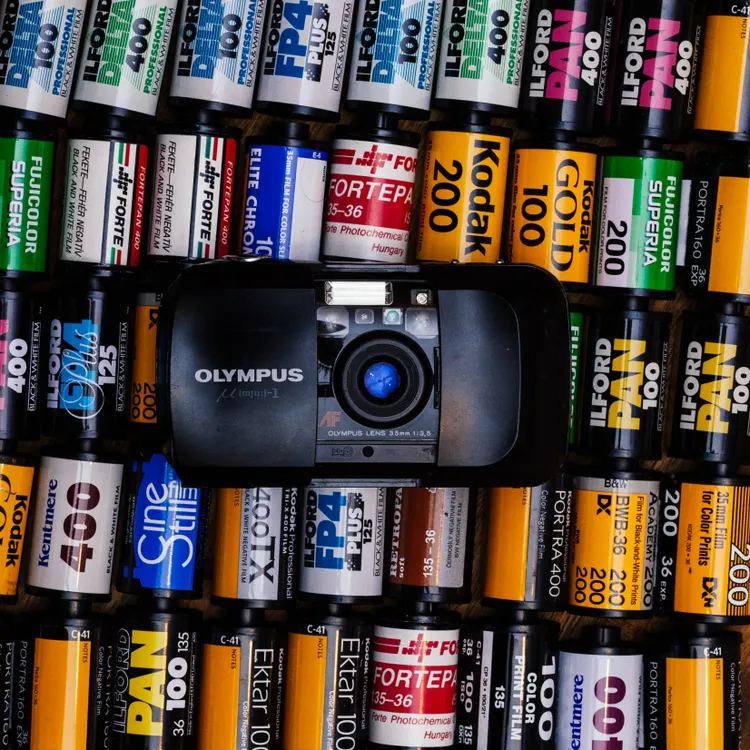
The most telling sign is hardware. Genuinely new film cameras are being built again: the half-frame Pentax 17, the Rollei 35AF, Kodak's reusable Ektar H35 line, and a steady stream of Lomography models. At trade shows in 2026, the liveliest corners have been analog: tables of fresh Ilford stock, HP5 Plus and FP4 Plus alongside the Delta professional films, selling briskly to crowds that skew young. A dying product line gets narrower every year; a healthy one keeps its catalog wide and adds to it.
The catch is the cost
The revival is real, and it is not cheap. A roll of color film now costs roughly three times its 2016 price, though a 2026 price survey found that film prices have broadly stabilized rather than continuing to climb, with some stocks actually falling. The demand is consolidating around fewer brands: a 2025 survey of Japanese film photographers found Kodak overtaking Fujifilm as the most-used film brand, after Fujifilm's 2025 price increases pushed shooters to choose. Shooting frequency, notably, held steady despite the price hikes, and the single biggest reason photographers shot more film was buying a new camera. The loop is virtuous: new cameras create new film demand, which funds new emulsions, which justify new cameras. Nostalgia started this revival. Economics is now finishing it.
Spotted an error? We correct openly: see our corrections policy.