retrospective
The Design History of the Rangefinder Camera
A century of squinting through two windows: how the rangefinder went from accessory to icon, and why it never quite died.
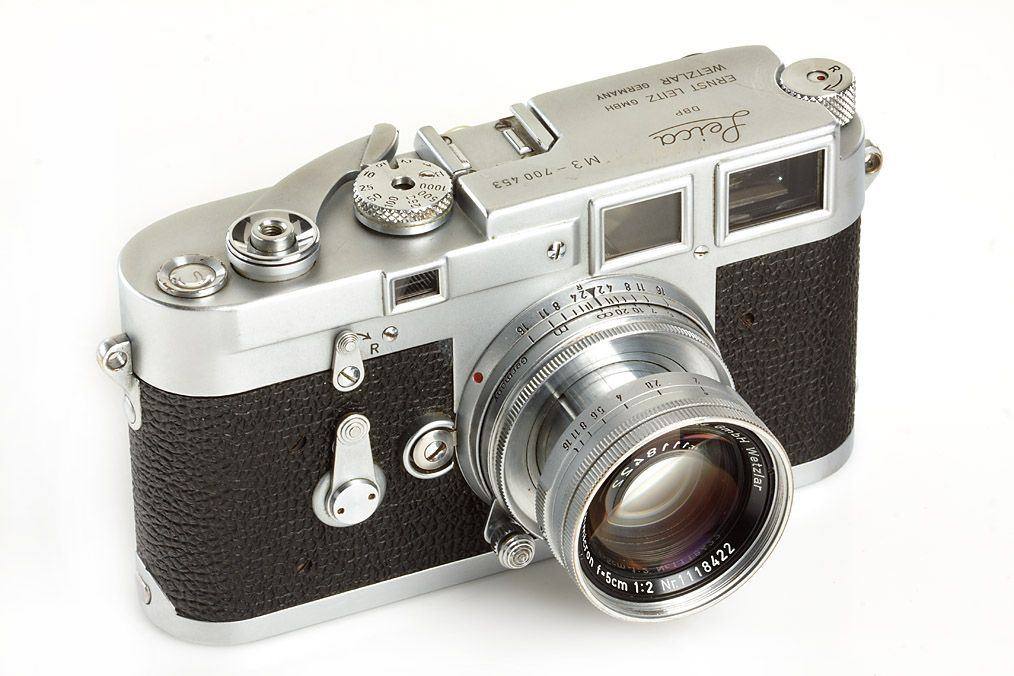
Leitz Photographica Auction
The rangefinder is photography's oldest focusing idea made visible: two windows, one image, and a ghost that snaps into alignment when the distance is right. The first coupled rangefinder sold to the public arrived on the 3A Kodak Autographic Special of 1916, a folding camera. But the rangefinder only became a design language with 35mm, and 35mm means Leica. The Leica I of 1925 had no built-in rangefinder at all; photographers who wanted precision clipped an accessory rangefinder, the Fodis, onto the camera and transferred the reading by hand.
1932: the duel begins
The breakthrough year was 1932, and it produced a rivalry that defined camera design for a generation. The Leica II integrated the rangefinder into the body, with separate oculars for framing and focusing, plus interchangeable lenses on a screw mount. Zeiss Ikon answered the same year with the Contax I, designed to beat the Leica in every specification: a die-cast alloy body, a vertically traveling metal shutter reaching 1/1000 second, a long-base rangefinder, a removable back, and a bayonet mount. It was more advanced on paper and less reliable in the hand, a pattern the two companies would repeat for decades. Leica stood for simplicity and lenses; Zeiss stood for engineering ambition.
The Contax II of 1936, redesigned by Hubert Nerwin, is the hinge of the whole history: it combined the viewfinder and rangefinder into one window, the arrangement every later rangefinder would copy. Leica did not catch up until 1954.
1954: the M3 perfects it
The Leica M3, launched at Photokina in 1954, is the most influential camera design of the 20th century that is not an SLR. It merged framing and focusing into a single large, bright viewfinder with automatic framelines for 50, 90, and 135mm lenses, introduced the M bayonet that Leica still uses today, and added a rapid film advance lever. More than 220,000 were built by 1967, and its viewfinder, at 0.91x magnification, remains the brightest any Leica has made. Nikon ran its own distinguished rangefinder line, the S-series, from 1951 to 1962, borrowing the Contax's looks and the Leica's logic.
The long afterlife
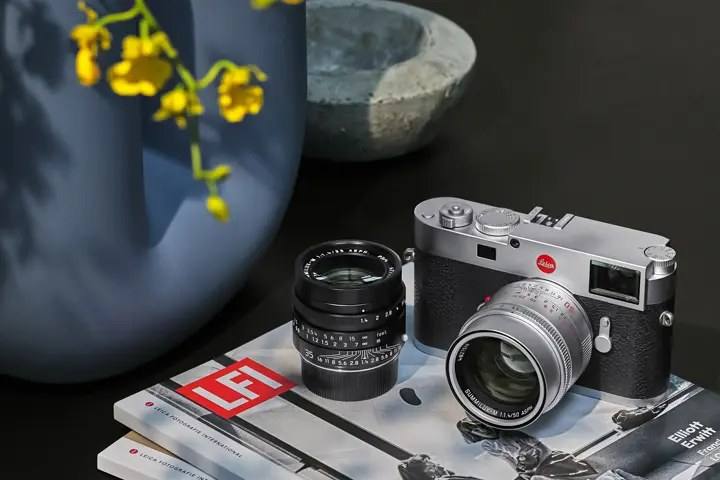
The single-lens reflex took the professional market in the 1960s, with through-the-lens viewing and longer lenses, and the rangefinder retreated to a niche. But the niche never closed. The M system's mechanical continuity, the quiet shutter, the small body, and the view outside the framelines kept it alive through the SLR decades and into digital, where the M10 and its successors still focus exactly the way Barnack's successors designed in 1954. A design that survives a century does so because it answers a need no successor quite satisfies: to see the moment before it happens, and the world just outside the frame.
Spotted an error? We correct openly: see our corrections policy.