explainer
The Engineering Behind Premium Camera Lenses
Apochromatic correction, aspherical surfaces, floating elements. What those terms actually mean, and why the finest lenses are exercises in controlled obsession.

Leica Camera AG
Every camera lens is a negotiated settlement between physics and practicality. Light of different wavelengths refuses to focus at the same point, spherical surfaces refuse to focus edge rays where they focus central ones, and the whole assembly must survive being carried, dropped and frozen. Premium lenses are distinguished not by escaping these constraints but by how far their designers are allowed to go in answering them. The vocabulary of that answer is worth understanding precisely, because manufacturers use it precisely.
Taming color
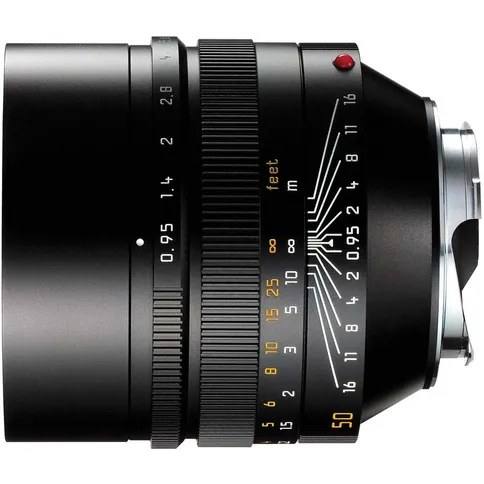
Chromatic aberration is the failure of a lens to bring all wavelengths to a common focus, visible as color fringing on high-contrast edges. An achromatic design corrects two wavelengths; an apochromatic design corrects three, effectively removing the fringing rather than merely reducing it. Zeiss's Otus 55mm f/1.4 APO-Distagon, a twelve-element, ten-group design, achieves its apochromatic correction with elements made from anomalous partial dispersion glass, special formulations whose dispersive behavior differs from normal glass in ways the designer can exploit. Leica's Noctilux-M 50mm f/0.95 ASPH uses five such elements alongside three made from high-refractive-index glass, while Hasselblad's XCD 55V combines three aspherical elements with an ED, or extra-low-dispersion, element in a nine-element, eight-group formula.
Aspherical surfaces
A spherical surface is easy to grind but optically imperfect: rays striking its edge focus closer than rays striking its center, the defect called spherical aberration. An aspherical surface varies its curvature from center to edge to correct this, and also proves decisive against distortion and field curvature. In a published technical discussion of the Zeiss Distagon 15mm f/2.8, Zeiss scientist Dr. Hubert Nasse explained that the design's two aspherical elements are used primarily to control distortion and field curvature. Aspheres are expensive because they are difficult to make to the required precision over their full area, which is why their presence, and their count, is a meaningful indicator of a lens's ambitions.
Floating elements
A lens optimized for infinity rarely performs identically at close range, because the spacing between elements that is ideal for distant subjects is wrong for near ones. A floating-element design moves one or more groups independently as focus changes, preserving correction across the range. The Noctilux-M 50mm f/0.95 uses a floating element to hold its image quality from one meter to infinity; Fujifilm's GF 55mm f/1.7 R WR, with fourteen elements in ten groups including two aspherical and two ED elements, and Leica's Summilux-M 35mm f/1.4 ASPH both employ floating groups for the same reason.
Coatings and mechanics
Glass transmits, but it also reflects, and every air-to-glass surface steals contrast unless treated. Zeiss's T* anti-reflective coating, applied to every surface in designs like the Otus line, exists to suppress the ghosting and flare that strong light would otherwise produce. Mechanics matter as much: the Otus 55mm's focus ring turns through roughly 240 degrees on a bearing-mounted helicoid, a deliberate choice for focusing precision, and diaphragm design, eleven rounded blades in the GF 55mm f/1.7 and the current Summilux-M 35mm, shapes the out-of-focus rendering photographers call bokeh. In leaf-shutter designs like Hasselblad's XCD lenses, the shutter sits inside the lens itself, permitting flash synchronization at every speed up to 1/2000s.
Verification
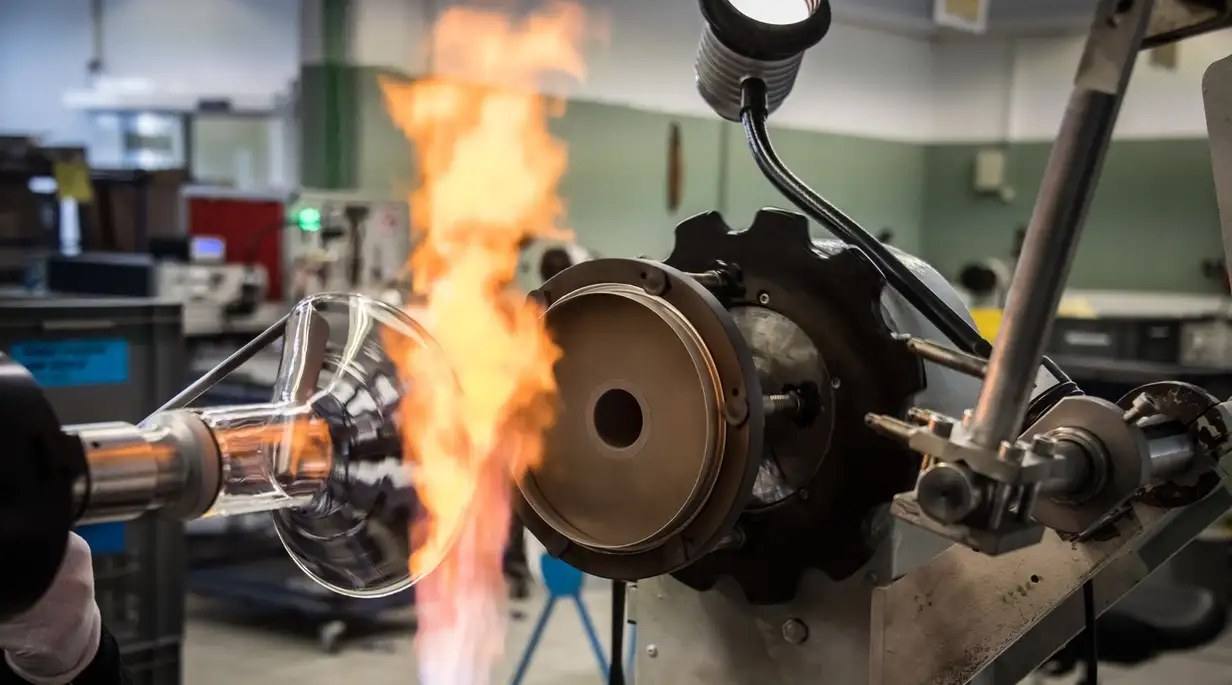
None of this matters unless the built lens matches the computed one. Published accounts of Leica's Wetzlar factory describe each lens being measured against its MTF, or modulation transfer function, design targets and readjusted until its measurements fall within parameters before final reassembly, with the effect of each minute adjustment checked in real time. That loop, design, build, measure, adjust, is the unglamorous core of premium lens engineering. As one noted optical test of the Otus put it, the lens was obviously designed for superior sharpness and contrast without regard to size, weight, or price. Removing those three constraints is the entire luxury.
Spotted an error? We correct openly: see our corrections policy.