feature
Inside Precision Lens Manufacturing
No factory visit, no speculation. What published accounts of Leica's Wetzlar works actually reveal about how premium lenses are made.
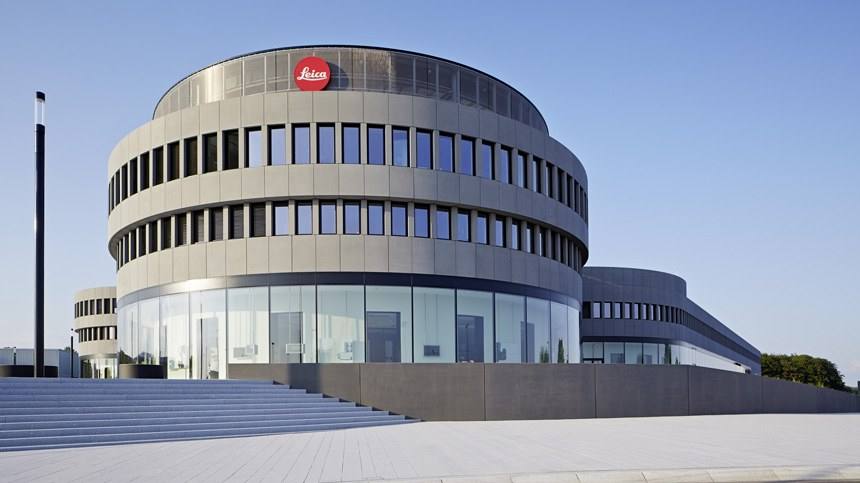
photo.gr
This article is an exercise in restraint. We have not visited Leica's factory, and we will not pretend otherwise. What follows is assembled entirely from published, attributable accounts of how lenses are made at Leitz-Park in Wetzlar, supplemented where noted by the manufacturers' own statements. In an industry fond of mystique, the documented facts are interesting enough.
Leica moved its headquarters and manufacturing to the newly built Leitz-Park campus in Wetzlar in February 2014. It operates a second production site in Vila Nova de Famalicão, Portugal, and offers guided tours of Leitz-Park to visitors throughout the year. Published tour accounts describe a factory floor where cameras, lenses and sport optics are produced, manufactured and assembled under one roof.
What the tours document
The numbers most often quoted come from Leica itself, via a behind-the-scenes film of the Leica M10: more than 50 adjustment steps are required to build the camera, encompassing around 1,100 individual components, including 30 parts milled from brass, 126 screws and 17 optical elements. The M10's chassis is machined in Portugal, with electronic components arriving in Wetzlar already assembled; Leica's technicians then perform the image-quality checking and calibration. One account quotes a maximum output of about 80 cameras per day.
Lens production, as documented across several tours, runs through grinding, centering, polishing, coating, cementing of doublets and lacquering, before elements enter a clean room for assembly and inspection. The clean room uses negative pressure and ceiling filtration to keep dust out of the space where cameras are assembled. Each finished lens is then tested against its MTF design targets and readjusted until its measurements fall within parameters before final reassembly, with the effect of each minute adjustment checked in real time on a monitor. Packing is treated with the same seriousness: serial-number stickers travel with each lens through bagging, casing and boxing, and are transferred to the warranty documents only when everything matches.
Small lots, named cities
A 2026 account of a Wetzlar visit with Leica's Stefan Daniel adds texture no brochure provides. Leica assembles lenses in small lots of specific designs, and internally each lens is named after a German city, so a production plan might read: today, we produce Hamburg. The optical glass arrives from companies such as Schott and Hoya; barrels and some mechanical parts come from suppliers or the Portugal plant. For aspherical elements, Leica uses precision glass moulding machines sourced from Japan, but describes having substantially improved the process itself: producing its own tools with high-tech diamond coating and even factoring the deformation of the glass during cooling into the optical calculation. Visitors, the account notes, were more than once asked not to take photographs.
Not everyone builds the same way
It is worth remembering that German design does not always mean German assembly. Zeiss's celebrated Otus DSLR lenses, for example, were built in Japan by Cosina to Zeiss specifications, a documented arrangement that says nothing against their quality and everything about how the modern optics industry actually divides its labor. What unites the premium tier is not geography but the verification loop: compute precisely, build carefully, measure everything, and adjust until the measurement matches the computation. The mystique is optional. The measurement is not.
Spotted an error? We correct openly: see our corrections policy.